Ghost Mannequin vs Flat Lay vs On-Model: What Actually Converts in 2026
Ghost mannequin, flat lay, or on-model? The conversion stats everyone quotes are unsourced. Here is what peer-reviewed research and UX testing actually show.
Munib Ali Laghari
Founder & Lead Developer
Quick answer
Which converts better: ghost mannequin, flat lay, or on-model?
None of them wins outright, and the conversion percentages widely quoted for them are uncited. Peer-reviewed research shows the effective format depends on the garment — product-focused images suit utilitarian pieces, styled images suit statement pieces. Fit is the top appraisal factor and the main return driver, so the payoff is fewer returns rather than a universal conversion lift.
Before
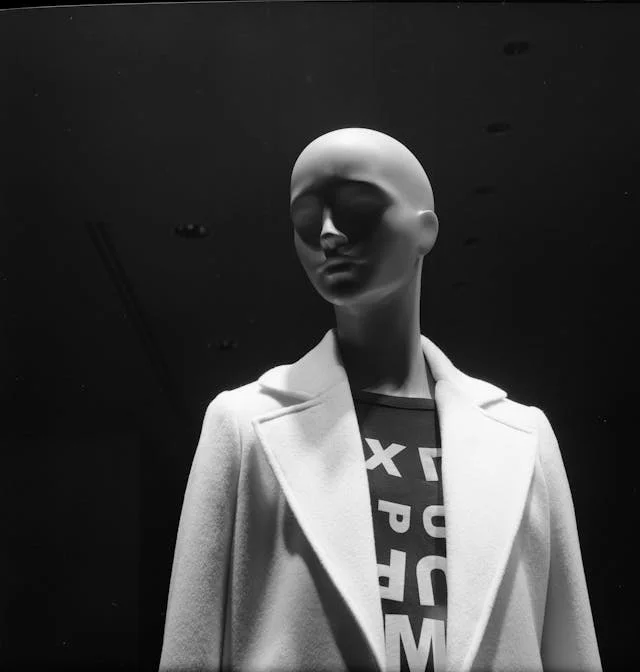
After
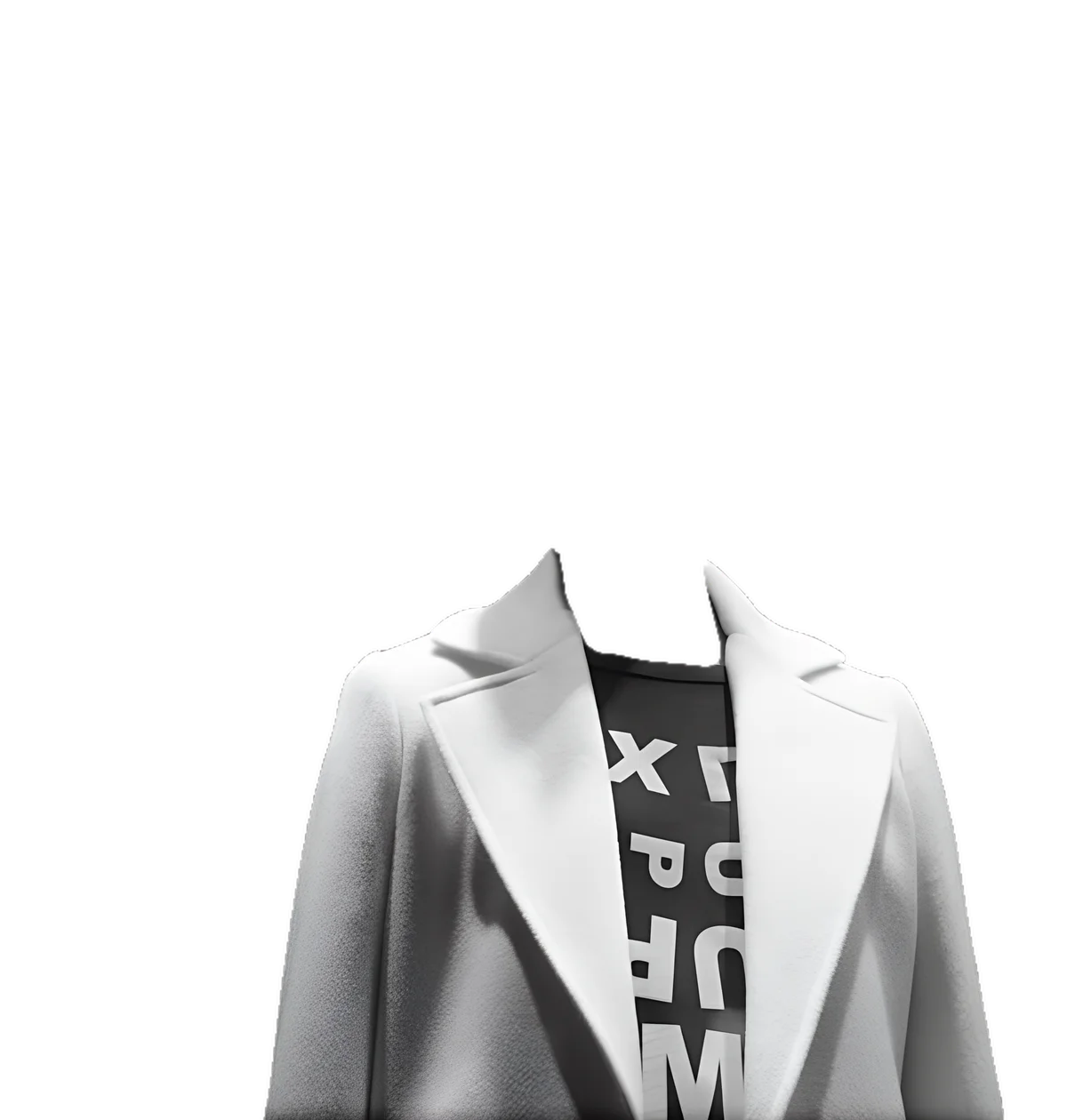
More examples like this: browse before & after results across every tool.
None of the three wins outright, and the conversion figures you will find quoted for them — on-model converting 30% better here, 50% better there, returns dropping by a quarter — do not trace back to any published study. What the actual research supports is narrower and considerably more useful: the effective format depends on the garment, and the measurable payoff shows up in returns and buyer confidence rather than as a universal conversion lift.
That matters because the choice is almost always framed as a budget decision. On-model costs the most, so brands treat flat lay as the cheap compromise, ghost mannequin as the sensible middle, and then argue about which one converts. It is the wrong argument. A product page is not one image, and nobody converts on a single photo — they convert when the last question they had got answered. Here is what the evidence supports about which format answers which question, and what to actually shoot if you are running a catalog rather than a campaign.
The Conversion Numbers Everyone Quotes Are Not Real
The widely repeated figures in this category — on-model converting 20 to 30% better, or 30 to 50% better, or returns falling 15 to 25% — appear across dozens of photography-service blog posts with no citation, no sample size, and no named study behind any of them. Several of the pages quoting them are selling the format they conclude is best. Treat them as marketing copy rather than evidence.
We went looking for the underlying research and did not find it. What we found instead was a smaller set of genuinely sourced findings that point somewhere more specific, and in one case directly contradict the popular claim. That contradiction is the most useful thing in this article, so it is worth being precise about what the research says and does not say.
What the Research Actually Shows
Three findings survive scrutiny. Apparel needs human context before shoppers can judge it confidently. Fit is the single most important thing a shopper evaluates and the primary reason clothing gets sent back. And improving fit imagery makes shoppers better at evaluating a garment without automatically making them more likely to buy it.
Cut-outs alone are not enough. In large-scale usability testing of apparel and accessories sites, the Baymard Institute found that plain cut-out images of a product against a white background are, in its words, "not enough" for products designed to be worn. Test participants said things like "I think without the model that it's hard to picture it" and "So this one, I don't think it has it on someone's back, so I don't know anything about what size it is." Baymard's conclusion is that the absence of model imagery produces "lower confidence and lower likelihood to move forward with purchasing." Its apparel benchmark — drawn from 1,765 hours of testing apparel and accessories sites — reports that 21% of sites still do not provide adequate human-model images, and 82% do not provide sufficient sizing information.
Fit drives returns. In a study published in the Journal of Consumer Behaviour, Chrimes, Boardman, Vignali and McCormick (2022) open from the position that clothing fit "is the most important consideration during the consumer's garment appraisal process but is the primary reason for the extensive number of online returns generated in the fashion industry." That is the cost line apparel imagery actually moves.
But better fit imagery does not automatically sell more. The same study ran a between-subjects web experiment with 400 UK female respondents and found that showing diverse body shapes, versus a single body shape, improved how well participants could evaluate garment fit — yet did not increase purchase intentions. Verbal fit information in the form of fit reviews improved fit diagnosticity and likewise had no significant effect on purchase intention. This is the finding that should end the "on-model converts 30% better" claim. Better fit communication demonstrably helps people judge a garment. Whether it makes them click buy is a separate question the evidence does not settle.
The right image depends on the product. Research by Jonghan Hyun in the Journal of Global Fashion Marketing (2025) ran two experiments comparing product-focused images against style-focused ones. Product-focused images produced higher purchase intention for utilitarian apparel; style-focused images were more effective for hedonic apparel. In plain terms: a basic tee and a statement dress want different photographs, and no single format is correct across a catalog.
What Each Format Is Actually For
Each format answers a different shopper question, and the useful way to choose is to name the question rather than compare conversion rates.
| Ghost mannequin | Flat lay | On-model | |
|---|---|---|---|
| What it shows | Three-dimensional shape, drape, how it hangs | Colour, print, cut, flat construction detail | Fit on a body, true scale, styling context |
| Question it answers | "What shape is this garment?" | "What exactly am I getting?" | "Will it look like that on me?" |
| Best garments | Structured: shirts, jackets, dresses, outerwear, tailoring | Unstructured and print-led: tees, knit basics, socks, accessories | Anything sold on how it looks worn |
| Consistency across a catalog | High | High | Low — varies with model, pose, and lighting |
| Marginal cost per extra SKU | Cents, in post-production | Cents, in post-production | A person, a studio, and scheduling |
| Main weakness | No sense of scale against a body | Reads flat, hides drape | One body is not every body |
Notice that the two columns brands treat as compromises are the two that scale. That is not an argument against on-model imagery — Baymard's testing is clear that shoppers want it — it is an argument about where to spend a finite budget across a long catalog.
Match the Format to the Garment, Not to the Trend
Apply Hyun's utilitarian and hedonic split directly to your catalog and most of the decision makes itself. Utilitarian pieces — basics, replenishment items, anything bought for function — are served by product-focused imagery, which is exactly what ghost mannequin and flat lay produce. Hedonic pieces, bought for how they make someone feel, are the ones that justify a styled on-model shoot.
Then apply a second filter for structure. If a garment has a shape when nobody is wearing it — a collar that stands, a shoulder line, a hem that falls — a flat lay throws that information away, and a ghost mannequin recovers it. If it does not have a shape of its own, a ghost mannequin adds nothing a flat lay did not already show, and a flat lay is the honest choice. We covered the mechanics of producing that effect in the ghost mannequin photography guide; this article is about when it earns its place.
The Gallery Is a Sequence, Not a Choice
Shoppers do not pick one image, they work through a gallery until their questions run out, so the productive question is what order to answer them in. A workable default sequence for an apparel listing:
- 1.Identify. A clean hero on white that survives being shrunk to a search thumbnail. For structured garments this is usually the ghost mannequin; for flat, print-led pieces it is the flat lay.
- 2.Fit. The garment on a body, so shape and proportion become legible. This is the frame Baymard's participants kept asking for, and its absence is what produced their lower confidence.
- 3.Scale. Something that establishes real size — worn, held, or beside a familiar object. Apparel listings routinely skip this and it is why "smaller than I expected" is such a common review.
- 4.Detail. Close crops of fabric, seams, hardware, and print, which is where flat lay imagery is genuinely superior to both alternatives.
- 5.Context. The styled shot, if the garment is the kind of purchase that benefits from one.
That sequence also explains why the versus framing misleads. Steps one and four are ghost-mannequin and flat-lay jobs. Steps two and five are on-model jobs. A listing that does all of them well outperforms a listing that picked a winner.
Why the Economics of This Changed in 2026
The reason this decision used to be a real trade-off is that all three formats cost roughly the same to produce: three setups, three sessions, three retouching bills. That is no longer true, because two of the three are now outcomes of post-production rather than separate shoots.
Photograph a garment once on a mannequin or a hanger and the ghost mannequin version is an editing step, not a second session. In EnhanceCraft that is a single job — the mannequin is removed, the interior is filled so the garment reads hollow, the background is stripped, an optional ground shadow is added, and the result is upscaled — for 4 to 5 credits, which works out to roughly 12 to 15 cents an image on our lowest paid plan. Flat lay processing is cheaper still. We broke the full arithmetic down in the product photography cost breakdown.
On-model is the one that did not get cheaper, because it needs a person. It is worth saying plainly that generating a synthetic model instead is not the cost-free workaround it appears to be: synthetic people carry disclosure obligations that photographs of real people do not, and marketplaces increasingly require them to be labelled as such. The economics that genuinely changed are the ones around your own garment, photographed once.
So the practical 2026 position is not "which format wins," it is: shoot every SKU once on a mannequin, generate the clean hero and the flat detail shots from that in bulk, and spend your model budget on the pieces where styling is the product.
What We Would Shoot for a 200-SKU Apparel Catalog
- 1.Every SKU on a mannequin or hanger, one frame, consistent position. Consistency here pays off later, because batch processing applies one shared mask across images shot the same way.
- 2.Run the whole set through a ghost mannequin pass. This produces the hero image for every structured piece in the catalog at a few cents each.
- 3.Shoot flat lays only for the pieces that have no shape of their own, plus detail crops of fabric and hardware across the range.
- 4.Pick the top 10 to 20% of SKUs by revenue for on-model. These are your hedonic pieces and your hero products; the long tail does not earn a model.
- 5.Check the format rules for every channel you list on before you finalise. Marketplace and platform requirements for apparel imagery differ by category and change, and a rejected main image costs more than the shoot. Our Shopify and Etsy playbook and the Amazon main image guide cover what each surface expects.
The Honest Answer
Ghost mannequin, flat lay, and on-model are not competitors. They answer different questions, they suit different garments, and the research that exists supports matching format to product rather than crowning a winner. The one claim worth being sceptical of is the confident percentage, wherever you see it quoted.
What did change is the price of doing more than one of them. Two of the three now come out of a single shoot and a batch job, which is the whole reason our AI image toolkit exists, and the e-commerce hub ties the seller-facing pieces together. Try the free Ghost Mannequin tool — 25 credits to start with no card — enough to run a handful of garments end to end and judge the output on your own product before you commit a catalog to it — then 10 every month.
Found this helpful?
Share it with your network
Ready to try it yourself?
25 free credits to start, then 10 every month. No credit card. Process your first image in under 15 seconds.
Try Ghost Mannequin freeMunib Ali Laghari
Founder & Lead Developer · EnhanceCraft
Munib Ali Laghari is the founder and lead developer of EnhanceCraft, an AI image toolkit. He writes about AI upscaling, photo restoration, and background removal. Connect on LinkedIn